
It was never about willpower. It's the hunger signal — and it can finally be quieted.
Semaglutide is a GLP-1 medication that works with a hormone your body already makes — the one that tells your brain you're full. The result for many people: less hunger, quieter cravings, and eating less without the constant battle. One simple weekly injection, reviewed and guided by a licensed provider through ILSA.
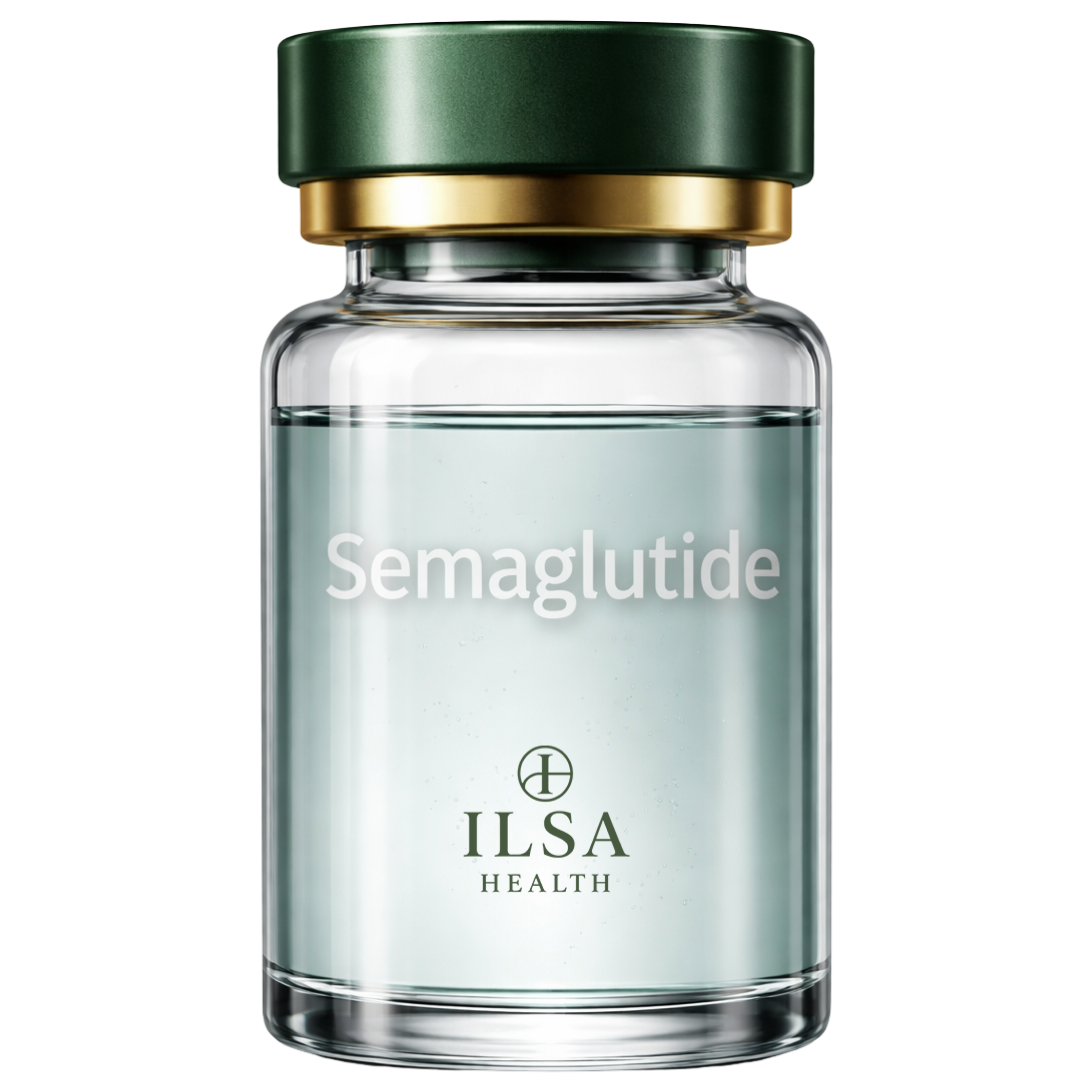
You were told it was discipline. It was always your biology.
Every diet asks you to out-muscle hunger with willpower. But hunger isn't a character flaw — it's a hormonal signal, and when you cut back, your body fights to pull you back. That's why restriction works for a while and then collapses. Semaglutide changes the conversation: instead of fighting the signal, it works with the same system your body uses to feel full.
It mimics a hormone your gut already makes — and acts in two places.
After you eat, your gut naturally releases a hormone called GLP-1 that signals fullness and helps regulate blood sugar. Semaglutide is a GLP-1 receptor agonist — it mimics that hormone, but in a steady, longer-lasting way. It works on two fronts: in your gut, slowing how fast your stomach empties so you feel full longer; and in your brain, turning down the appetite and craving signals that drive overeating. Together, that's why so many people simply want less food — not through force of will, but because the signal itself has changed.
In the gut.
In the digestive tract, semaglutide slows the rate at which your stomach empties. Practically, that means a normal-sized meal keeps you satisfied longer, the urge to go back for more fades, and the gap between meals stops feeling like a countdown. It also supports healthier blood-sugar responses after eating. None of this relies on willpower — it changes the physical signal of fullness itself, which is why portions that once left you hungry can start to feel like enough.
One molecule. Five shifts in how your body handles hunger.
Each dot represents the GLP-1 signal at work across your system. Semaglutide doesn't just suppress appetite in one place — it changes several connected pieces of how hunger, fullness, and cravings are regulated. Tap a shift to see what it means day to day.
The complete GLP-1 effect
One weekly molecule, working across five connected pathways: less hunger, quieter cravings, greater fullness from less food, slower stomach emptying, and steadier blood sugar. Together they explain why semaglutide feels less like dieting and more like the appetite that used to run you finally turning down.
Six things people notice once the noise goes quiet.
Hover (or tap) to flip each card. These describe what semaglutide is designed to do — alongside a healthy diet, regular movement, and the guidance of your provider through ILSA. Experiences and results vary from person to person.
The hunger turns down
Hover to reveal →Appetite Signaling
By acting on the appetite centers of the brain, semaglutide is designed to reduce how hungry you feel in the first place. For many people the shift is striking: the gnawing, all-day pull toward food softens into something they can actually think past. Less hunger means smaller portions don't feel like deprivation — they feel like enough.
The food noise quiets
Hover to reveal →Fewer Cravings
"Food noise" is the constant mental chatter about eating — what's next, what's in the cupboard, the snack you're trying not to think about. People on semaglutide frequently describe this background hum simply going quiet. That mental space, freed up from negotiating with cravings all day, is one of the most-reported and most-valued changes.
Full on less food
Hover to reveal →Satiety & Slower Emptying
Because semaglutide slows how fast your stomach empties, a moderate meal stays with you and signals fullness sooner. The "I could keep eating" feeling tends to arrive much earlier — and stays gone longer. Smaller plates stop feeling like a sacrifice and start feeling like genuinely enough, without the mid-afternoon crash to the snack drawer.
Steadier blood sugar
Hover to reveal →Glucose Regulation
GLP-1 medications help the body manage blood sugar by supporting insulin release in response to meals and smoothing the post-meal spikes and crashes that can drive more hunger. Steadier blood sugar can mean steadier energy and fewer of the sharp dips that send you reaching for something fast and sweet. Your provider will factor your individual health into the picture.
Weight loss that follows
Hover to reveal →The Downstream Result
When hunger and cravings settle and portions naturally shrink, weight loss tends to follow. In clinical studies, adults taking semaglutide alongside lifestyle changes lost a meaningful share of body weight. It isn't magic and it isn't instant — results vary, it works best with healthy eating and movement, and your provider helps set realistic expectations for you specifically.
Just once a week
Hover to reveal →One Shot, At Home
No daily pills, no clinic visits to schedule. After a provider through ILSA reviews your intake and, if appropriate, authorizes treatment, your medication and supplies ship to your door. A typical routine is one small subcutaneous injection a week, done at home in a couple of minutes, with your dose guided and adjusted by your provider over time.
Working with your body — not against it.
For the first time, weight management doesn't have to mean white-knuckling through hunger. Semaglutide addresses the signal itself, under the guidance of a licensed provider — simply, on a schedule that fits real life.
Is your weight a willpower problem — or a signal problem?
Five quick questions across the patterns that matter most. You'll get a composite snapshot of how much your appetite and hunger signals may be working against you. This is a reflective snapshot, not medical advice or a diagnosis — only a licensed provider through ILSA can determine whether semaglutide is right for you.
—
Four steps. No clinic visit. No waiting room.
A short online intake, a licensed provider's review, and home delivery if you're approved. ILSA connects you with the provider — the clinical decision is always theirs.
Start Online Visit
Complete a secure intake about your health, history, and weight goals. It takes just a few minutes.
Provider Review
A licensed provider through ILSA reviews your intake and history to decide whether semaglutide is appropriate for you.
Shipped to You
If approved, a licensed U.S.-based pharmacy ships your semaglutide and injection supplies to your door, cold-packed.
Inject Weekly
Follow your provider's dosing plan for one small weekly injection at home. Support and dose adjustments are a message away.
A guided program — not just a vial in a box.
When a provider through ILSA approves your treatment, you get more than medication. You get an actual plan: the right starting dose, a titration schedule, supplies, and a provider relationship for the questions that come up along the way.
Your Semaglutide Medication
GLP-1 medication prepared by a licensed U.S.-based pharmacy, shipped on a monthly cadence. Cash-pay and transparent — no insurance required.
Injection Supplies & Dosing Plan
Syringes, needles, and alcohol pads included, plus a clear, provider-guided titration schedule so you start low and adjust safely over time.
Licensed Provider Oversight
Your treatment is authorized and overseen by an independent licensed provider through ILSA, who reviews your history, sets your plan, and adjusts as needed.
Ongoing Support & Check-Ins
Side-effect questions, dose changes, and refills are handled through the secure ILSA platform — so you're never navigating it alone between shipments.
If you've done everything right and your body still won't cooperate.
Semaglutide is for adults pursuing meaningful weight loss who want a medically guided option that works with their biology. It's especially worth considering for these four people — pending a provider's review and eligibility.
The one who's tried every diet
Keto, fasting, calorie counting, the apps — each one worked until biology pulled the weight back. If your history is a cycle of loss and rebound, that's not failure; it's the system doing its job. Semaglutide targets the signal those diets were fighting.
The one drowning in food noise
If your day is a running negotiation with cravings — planning, resisting, caving, repeating — the mental load alone is exhausting. The quieting of that noise is one of the most common and most life-changing things people describe on semaglutide.
The one watching their health markers
When weight starts affecting blood sugar, energy, and how you feel day to day, it stops being about appearance. A licensed provider through ILSA can review your full picture and discuss whether a GLP-1 fits your health goals.
The one who wants it done right
No sketchy sources, no guesswork on dosing. You want a real provider, a real plan, and medication from a licensed U.S.-based pharmacy — with support along the way. That's exactly how the program through ILSA is built to work.
One transparent price. No insurance maze.
Cash-pay and straightforward — your monthly program includes the medication, supplies, and oversight from a licensed provider through ILSA. No insurance to fight, no surprise billing, no hidden fees. You start only if a provider determines semaglutide is right for you.
- Once-weekly semaglutide
- Injection supplies included
- Provider review & dosing plan
- Ongoing support & refills
- Shipped to your door
What you're probably wondering.
Semaglutide is the active ingredient found in some well-known branded GLP-1 medications. What's offered through ILSA is a compounded semaglutide, prepared by a licensed U.S.-based pharmacy when a provider authorizes treatment — it is not a branded product and is offered on a cash-pay basis. The molecule and mechanism are the same class of GLP-1 receptor agonist; your provider can explain the specifics for your situation.
Yes. Semaglutide is a prescription medication. ILSA is a telehealth platform — it doesn't prescribe. Instead, ILSA connects you with independent, licensed providers who review your secure online intake and health history and determine whether semaglutide is appropriate for you. If it isn't a good fit, they'll tell you. The clinical decision always rests with the provider.
Semaglutide is a GLP-1 receptor agonist — it mimics a hormone your gut releases after eating. It slows how quickly your stomach empties (so you feel full longer) and acts on the brain's appetite centers (so you feel less hungry and experience fewer cravings). It also supports healthy blood-sugar regulation. Most people don't describe it as forcing themselves to eat less — they describe simply wanting less.
Results vary from person to person, and no honest provider can promise a number. In clinical studies, adults taking semaglutide alongside diet and exercise lost a meaningful share of their body weight over time — but individual results depend on your starting point, dose, consistency, and lifestyle. It works best as part of healthy eating and movement, not instead of them. Your provider will help set realistic expectations for you.
Like any medication, semaglutide can have side effects. The most common are gastrointestinal — nausea, and digestive changes — which often ease as your body adjusts and as the dose is increased gradually. Starting low and titrating up under provider guidance is designed to minimize them. More serious effects are less common. Your provider reviews your history, explains what to watch for, and is available if anything comes up. Always report concerning symptoms promptly.
Semaglutide isn't right for everyone. It is generally not appropriate for people with a personal or family history of medullary thyroid carcinoma or Multiple Endocrine Neoplasia syndrome type 2, those who are pregnant or breastfeeding, and certain other conditions. This is exactly why a provider review is required: your individual history determines eligibility. Be complete and honest in your intake so the provider can make a safe decision.
Yes — semaglutide is a small subcutaneous injection, typically once a week, using a fine needle. Your kit ships with the supplies you need, and the platform provides clear guidance on how to do it comfortably at home. Most people find it quick and far less daunting than they expected. If self-injecting concerns you, mention it in your intake so your provider can walk you through it.
Semaglutide is available nationwide through the ILSA platform, subject to provider evaluation, eligibility, and the rules of your state. Whether treatment can be authorized depends on your individual review and where you live. The fastest way to find out is to start the online visit — there's no commitment until a provider approves.
Once a provider authorizes treatment, a licensed U.S.-based pharmacy prepares your semaglutide and ships it cold-packed and discreetly to your door. It typically needs refrigeration, and your kit includes storage and handling instructions. If anything about a shipment looks off, reach out through the ILSA platform before using it.
The monthly price covers your provider-authorized semaglutide, injection supplies, your dosing plan, and ongoing support through the platform — all cash-pay, with no insurance required. Pricing is transparent with no hidden fees. Your provider determines your specific plan, and any details about ongoing fulfillment are made clear before you commit.
Yes. Your intake and health information are handled through HIPAA-compliant systems. Your data is used to connect you with a provider and fulfill an authorized order — not sold. You stay in control of your information throughout.
The willpower battle was never winnable. So stop fighting it.
One weekly injection that works with the hormone your body already uses to feel full. A short online visit, reviewed by a licensed provider through ILSA who decides if it's right for you. No insurance maze, no clinic trips, no hidden fees — just a medically guided path, delivered.
Start Your Online Visit
Medical & Regulatory Notice
The health assessment offered through ILSA Health is designed for preliminary screening and educational purposes only. Completion of this questionnaire does not create a doctor–patient relationship.
All medical services, including clinical evaluations, treatment plans, and prescription decisions, are provided exclusively by independent U.S.-licensed healthcare providers. Providers exercise full medical judgment and determine eligibility based on individual clinical assessment and applicable state regulations.
If approved, prescriptions are dispensed by U.S.-based 503A compounding pharmacies that are registered with the FDA and operate in compliance with United States Pharmacopeia standards. Compounded medications are not FDA-approved and have not undergone FDA evaluation for safety, effectiveness, or manufacturing consistency.
Individual responses to treatment vary. No specific results are guaranteed.
ILSA Health does not manufacture, compound, or directly dispense medications. Product appearance, packaging, and labeling may vary from images shown on this website.
All trademarks and product names are the property of their respective owners.
GET SUPPORT
Email: [email protected]
Phone: 754 227 9 227
1600 S Dixie HWY, Suite 108,
Boca Raton FL 33432





© ILSA Health - 2026 All Rights Reserved
Clinic Designed By: Med Clinic Authority